BEYOND THE CHALKBOARD

image representing workplace safety courses

Celebrating 27 years of professional education services, Safety & Environmental Associates, Inc. (SEA) has taken training beyond the chalkboard.


It has been our belief throughout the years that if we can get the student to automatically think or behave progressively what we call “Unconscious Competence” then the Environmental or Safety program can effectively grow. Using audience response techniques designed to establish a connection between the trainer and participants, SEA’s training systems have proven to increase attention and comprehension by the student beyond that of traditional training.

THE CHALLENGE

For any company, coordinating a successful training event is always a vast undertaking. For a participant to truly learn, they must first be willing to engage in the subject. And for them to engage in the subject, they must be active in the learning process. Studies have shown that the adult recall in the learning process depends on how active a person is in the training. “People remember 90 percent of what they say and do as opposed to 30 percent of what they see and hear. Although kinesthetic learners retain best, they make up only 5 percent of the population whereas visual learners make up 65 percent and auditory learners, 30 percent.” (Mind Tools 1998)

THE SOLUTION

By introducing SEA’s “Beyond the Chalkboard” audience response system; SEA’s has taken ordinary training to new levels of comprehension. “The goal was to get the participant to go beyond their current level of comprehension and push past the ‘good training program – had a nice time’ evaluations usually received from attendees after training events.” So, the SEA team explored numerous training techniques and presentation concepts and developed ways to capture and quantify the actual learning that took place at training presentations. And the results were shocking! By introducing the Beyond the Chalkboard Audience Response System, SEA has dramatically increased the comprehension of our participant beyond the best-known training methods. “We are navigating the waters with the student, if an idea or concept is not fully understood we can discover that quickly and adjust our training to meet the student’s needs.” “If the concept is known don’t teach it to them again – just refresh them and move forward: If the concept is unknown don’t brush over it – then teach them.”

CONCLUSION

Being able to turn to an enthusiastically received system is a great way to get people up to speed quickly through a learning concept while assuring the appropriate level of learning occurs.

  • Good Training = Good Employee Habits
  • Good Employee Habits = Safe and Productive Work
  • Safe and Productive Work = Less Loss from Hazards or Poor Attitude
  • Less Time from Hazards or Poor Attitude = Better Production at a lower cost
  • Better Production at a Lower Cost = Strong Bottom Line

Try it out!

If you would like more information and an opportunity to experience this training for free Contact Us or give us a call at 888-374-3442. We are here to help!
By Keina Jennings March 12, 2026
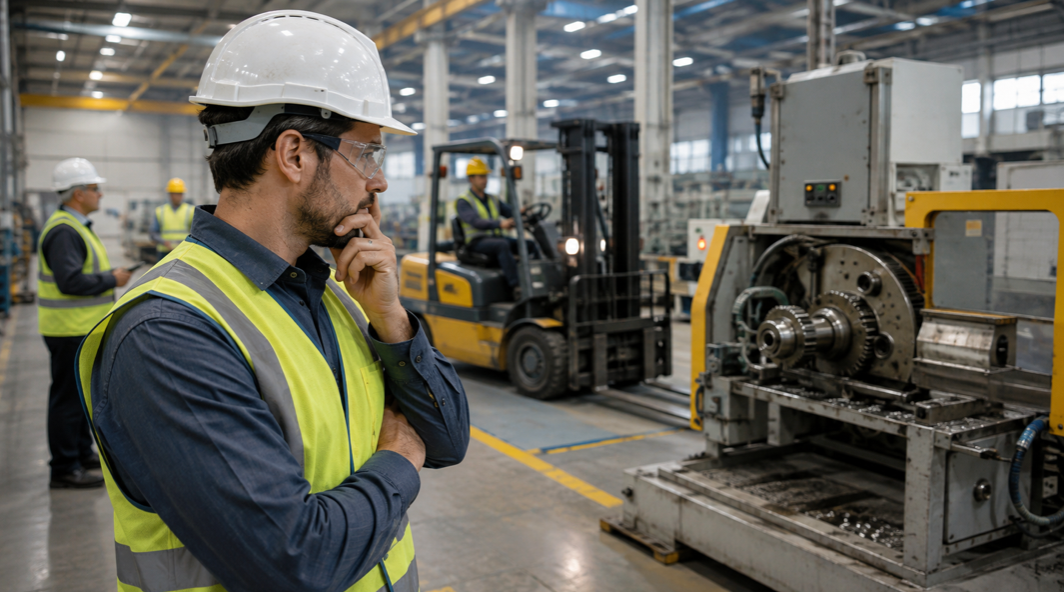
A Quick Guide for Industrial and Manufacturing Facilities By Keina Jennings, CEO/CFO, SEA
By Don Harkness March 12, 2026
By Don Harkness, East Coast Regional Manager, SEA Ladder Inspection Safety At-A-Glance Ladders of all types are useful in the workplace. They are tools that allow workers to safely reach another level. Working at elevated levels poses plenty of risks, ones that have been covered in many regulatory training courses you have attended. Walking, Working Surfaces and Fall protection all focus heavily on the different hazards, of which SEA would be honored to share with you, but today, I want to focus on what needs to happen prior to using the ladder. The Right Tool for the Job And make no mistake, ladders are tools, and only perform as well as we, the operators, allow them to. So, what do we need to consider when picking the right ladder for our job? Several key factors include, but aren’t limited to: What are we doing? What style do you need? Step Ladders, extension ladders, and platform ladders all serve different purposes! What is the weight limit of my ladder? Note that the weight limit includes you and all the tools/equipment you are wearing, including fall protection! What height do I need my ladder to be? Ladders come in all shapes and sizes, so ensure you pick one that allows you to not put yourself at risk, even if it takes a little extra time to go and get it! What material should my ladder be made of? Most ladders are fiberglass but also come in several other materials. Make sure you plan for the task and don’t pick a metal ladder when working with electricity, for example The Most Important Step After choosing the ladder for our task, we need to perform an all-around inspection of the ladder. How often do we need to perform this inspection? Does it need to be documented? Ladders must be inspected before every use to ensure that no damage has occurred. As far as documentation goes, it is required that a documented inspection occur once a year, but your company policy can dictate more frequent documented inspections.
By Alison Jennings March 9, 2026
By Alison Jennings, VP Operations, SEA Sometimes it takes a real-life moment to remind us how quickly routine tasks can turn into injuries. Recently, I had a reminder of just how quickly something simple can turn into an injury. I was hanging a picture frame at home. Nothing complicated—just one of those quick projects you knock out in a few minutes. I picked the frame up by the sides to move it into position. As I lifted it, the bottom of the frame suddenly gave out. The glass dropped straight down and landed directly on the top of my bare foot. Within seconds, what started as a simple task turned into a trip to urgent care. The cut was deep enough that I ended up needing eight stitches. Looking back, there were a few things I didn’t think about in that moment. I was barefoot. I didn’t consider the possibility that the frame might break. I didn’t think about what could happen if the glass slipped or fell. It really wasn’t a dangerous job. I wasn’t using power tools or heavy equipment. I was just hanging a picture. But that’s the reality of many injuries—they don’t happen during obviously dangerous activities. They happen during everyday tasks when we assume nothing will go wrong.
Show More